Eight moves from the portfolios of Sber designers
7 August 2026 · 3 min read
The gallery currently holds twenty one portfolios by designers at Sber. I opened eight of them back to back, and in every one there was exactly one decision worth taking. None of them is about taste. Each is about what the reader learns first.
A slider turned all the way down
Under his photo, Zorigto Sansaraymayev put a slider labelled Pretentiousness Level. It is dialled to the minimum.
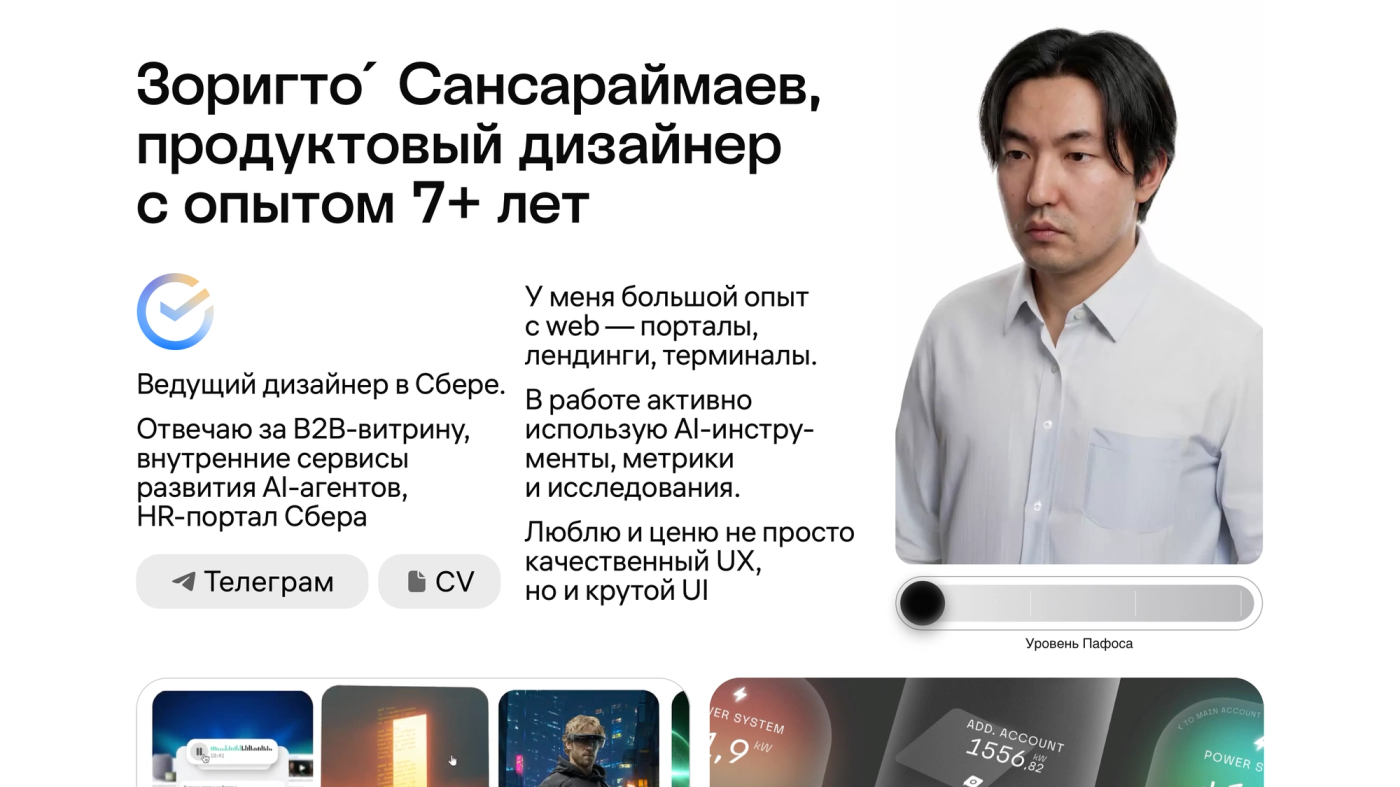
One detail on the whole first screen, and it does more work than a paragraph about soft skills. You know who you are dealing with before you have read a word about their experience.
Real numbers instead of round ones
Misha Naer keeps a Built section for the things he shipped himself. Next to each one he prints the user count: 856 and 895.
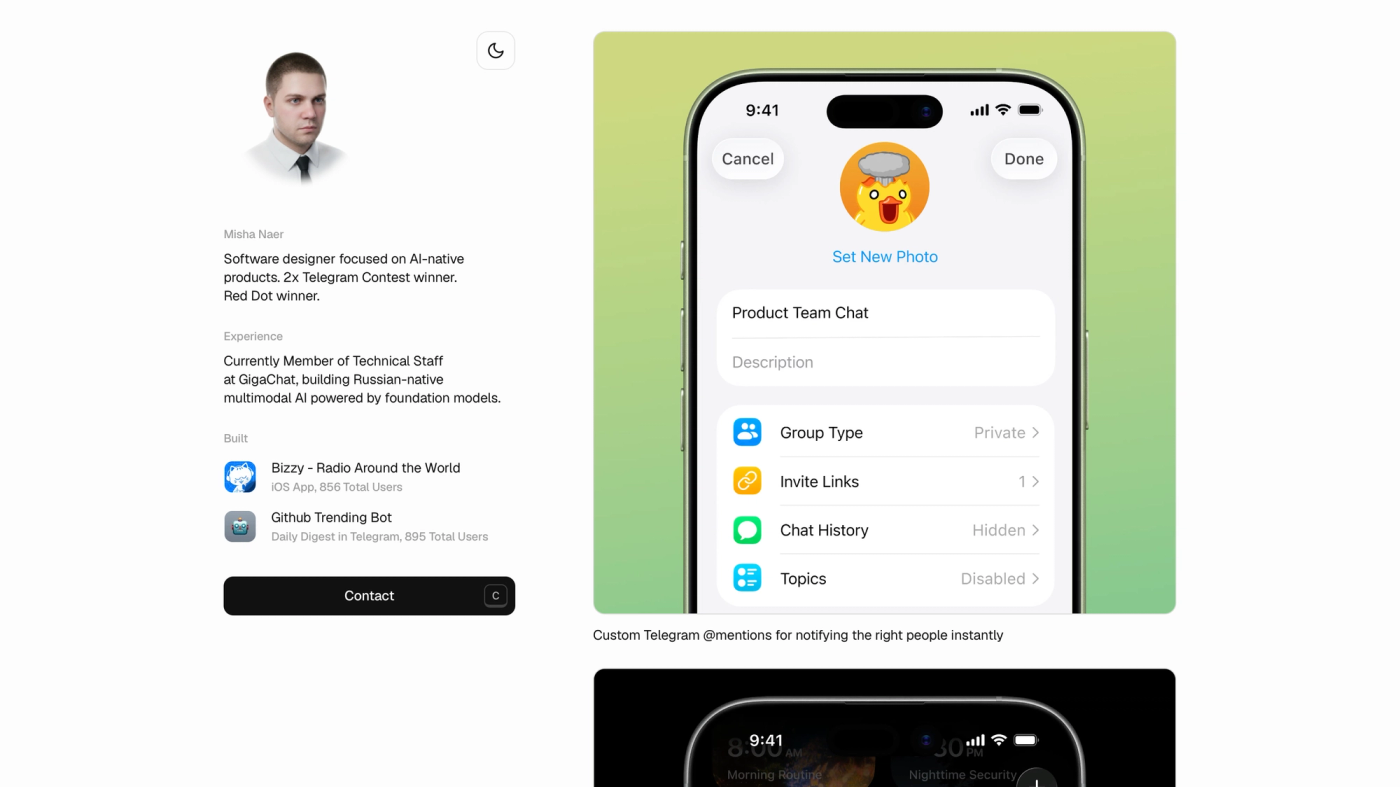
Eight hundred and fifty six. Not "thousands of users", not "a growing audience". An exact number nobody would have noticed had he not written it. That is precisely why it lands: someone who does not round that figure up is not embellishing anything else either.
Own work first, client work after
Evgenia Ignatova opens with three concepts she came up with herself. Sber Investments, Otkritie and MTS come below.
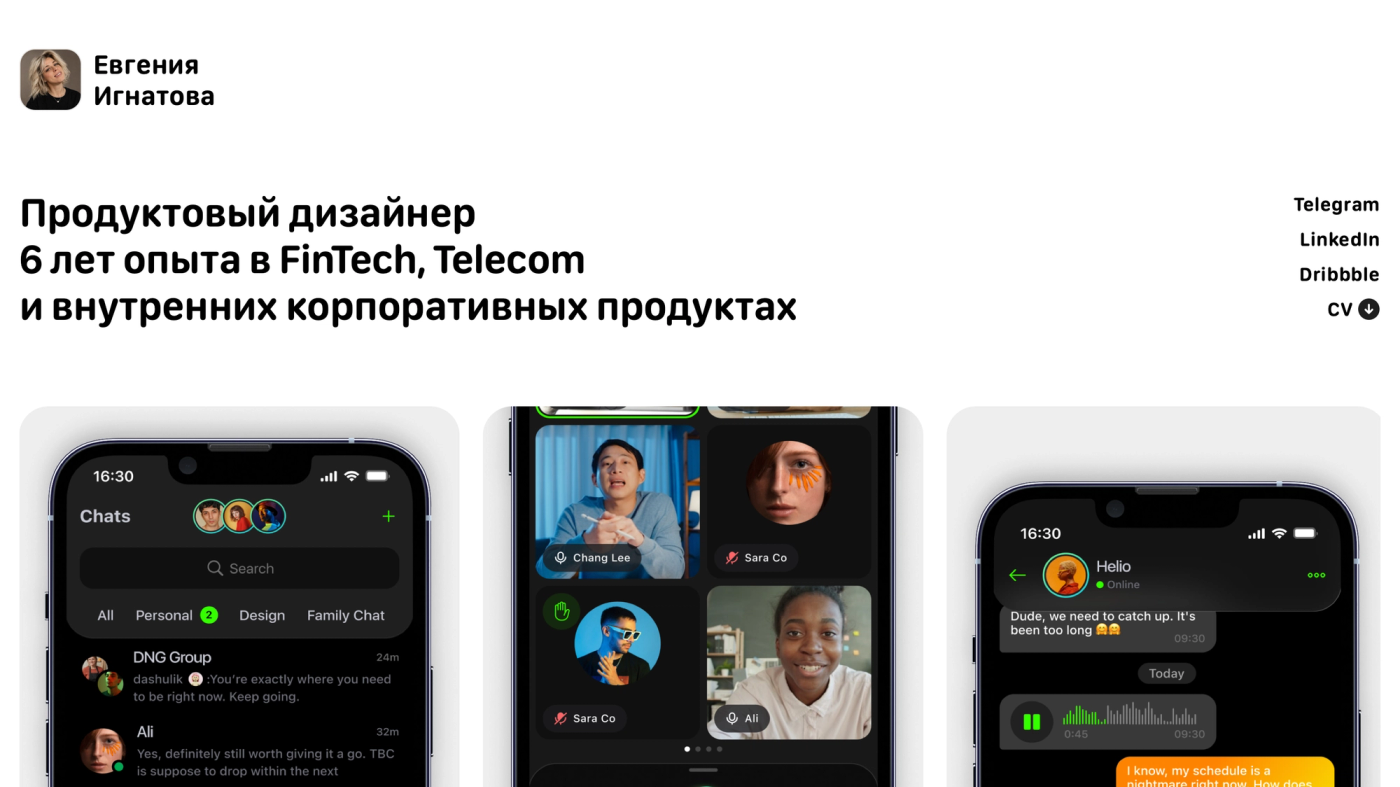
The order is arguable, and that is the point. Client work proves you can build what you were asked for. A self-initiated concept shows what you choose to build when nobody asks.
The date in the corner
Andrey Bogoslovskiy prints "Portfolio '26" in the top right corner.
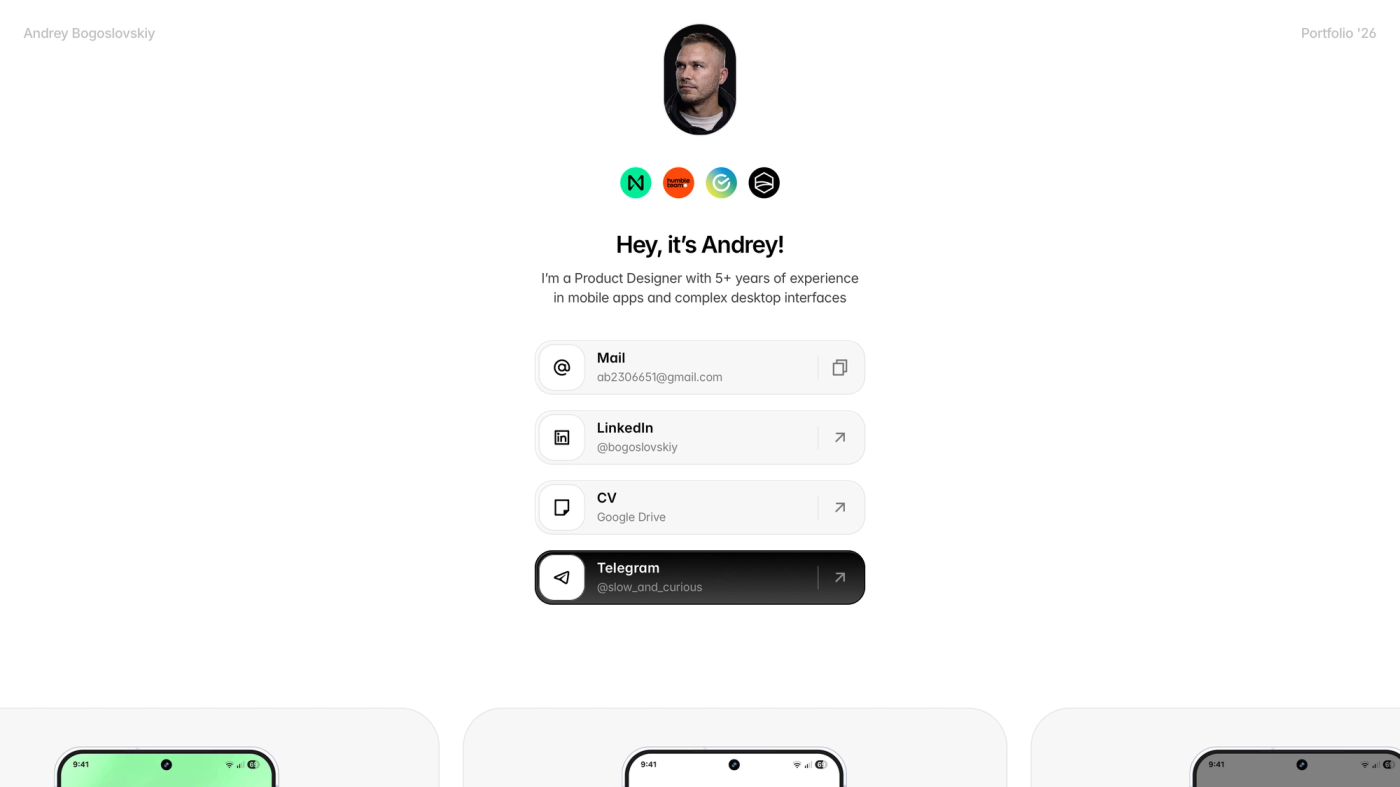
A small thing that answers the first question anyone has on an unfamiliar site: is this still alive? An undated portfolio always reads as older than it is, because there is no way to check.
Strengths explained by comparison
Instead of an about block, Rick Bacardin wrote a strengths block, and explained each one with a comparison. His experience across four roles becomes a chess player who has played every piece. His work with teams and process becomes a conductor.
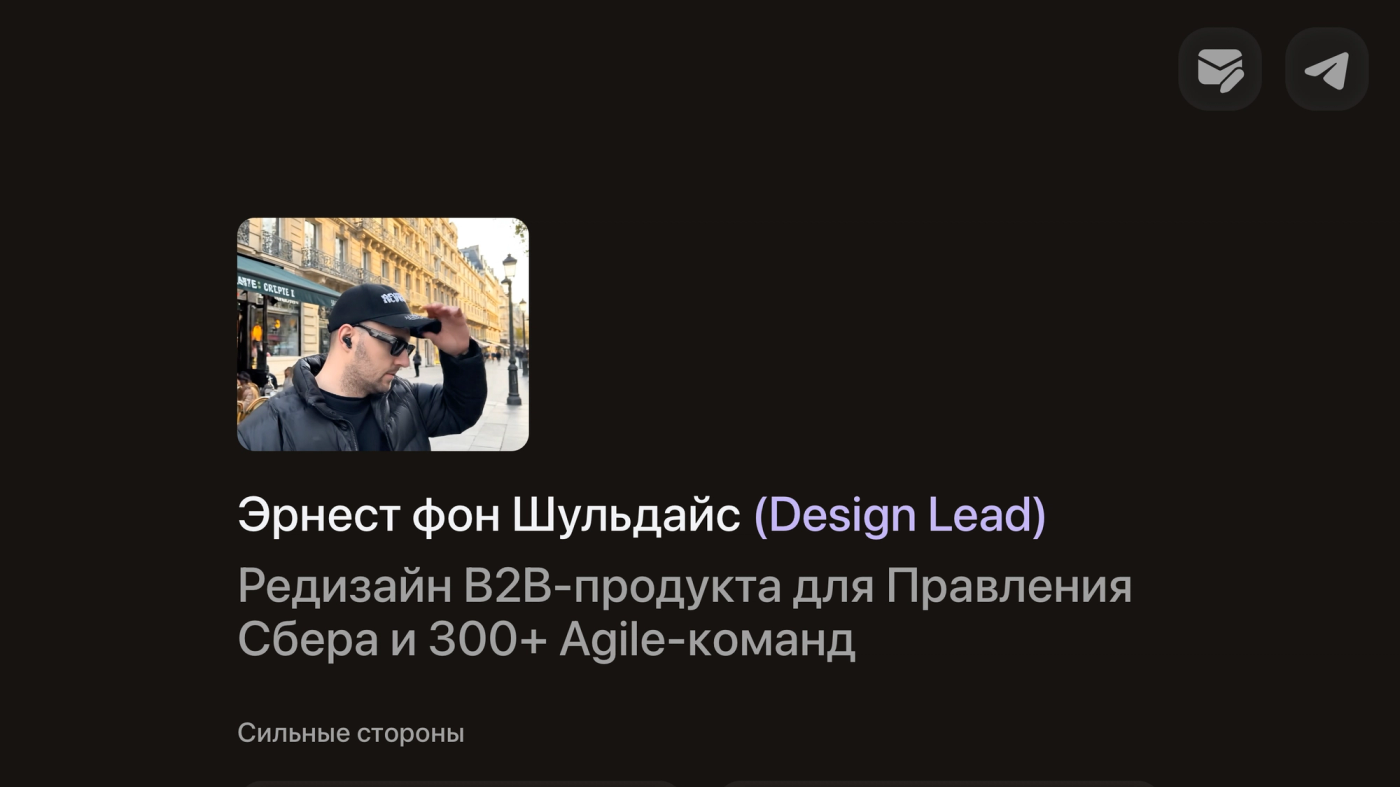
A comparison sticks; a list of competencies does not. "Design, engineering, research and management" is gone a minute after the tab closes. The chess player stays.
Three years, said out loud
Zhanna Kosova writes it on the first screen: three years in design. Beside it, two facts: shipped two end to end projects, joined big tech within a couple of months.
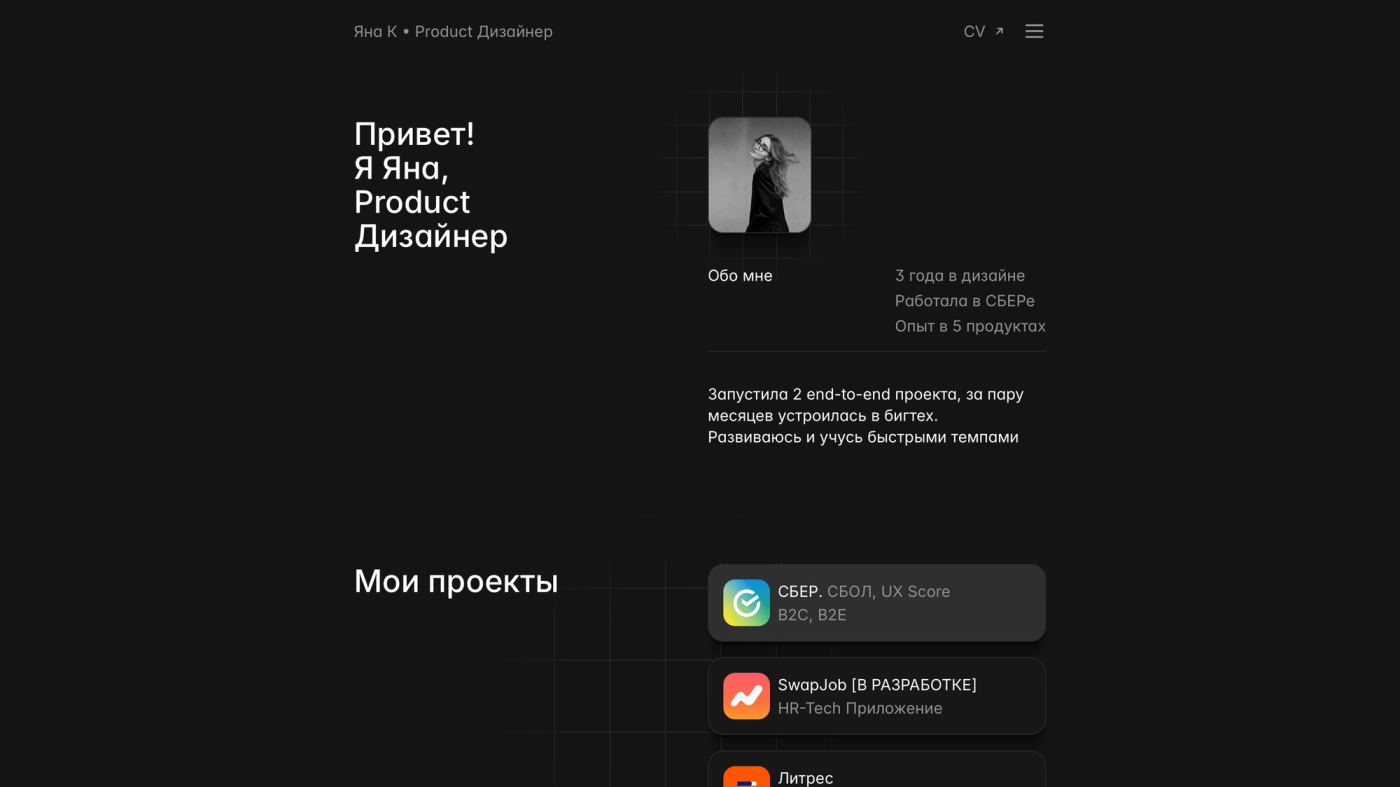
The temptation to blur a short track record is enormous, and almost everyone gives in to it. The opposite is what works. Three years stated plainly, plus two concrete outcomes, reads more honestly than a vague "several years in product design".
Age instead of seniority
Mikhail Ezhov opens with "Mikhail Ezhov, 19 y.o." The next line is about a product used by 85 million people.
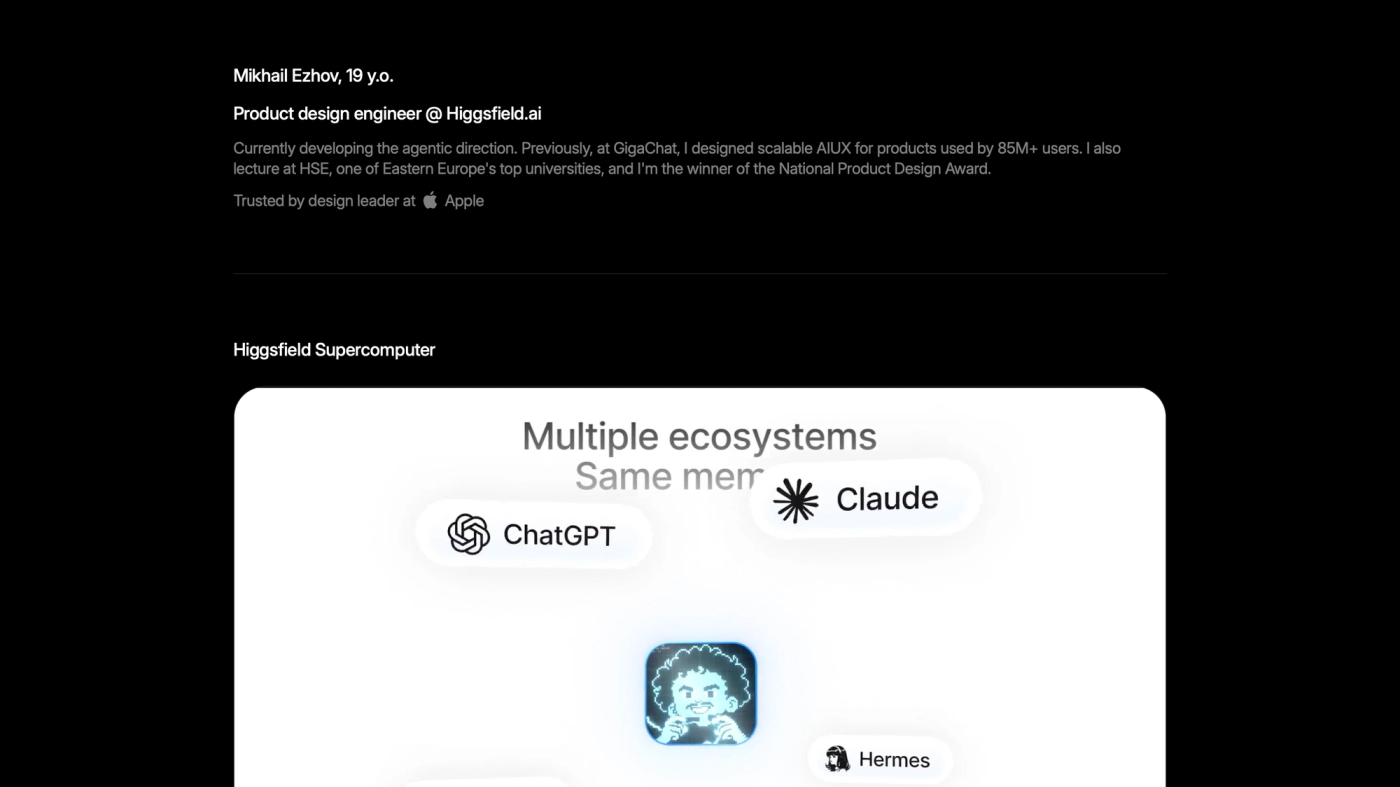
Age is the thing people usually hide. Here it is the first line, and it works as an amplifier: nineteen years old and eighty five million users hit harder together than either would alone.
A stage on every piece
Next to each project, Anton Kriviakin marks its stage: one is running now, another is in development, a third is not announced yet.
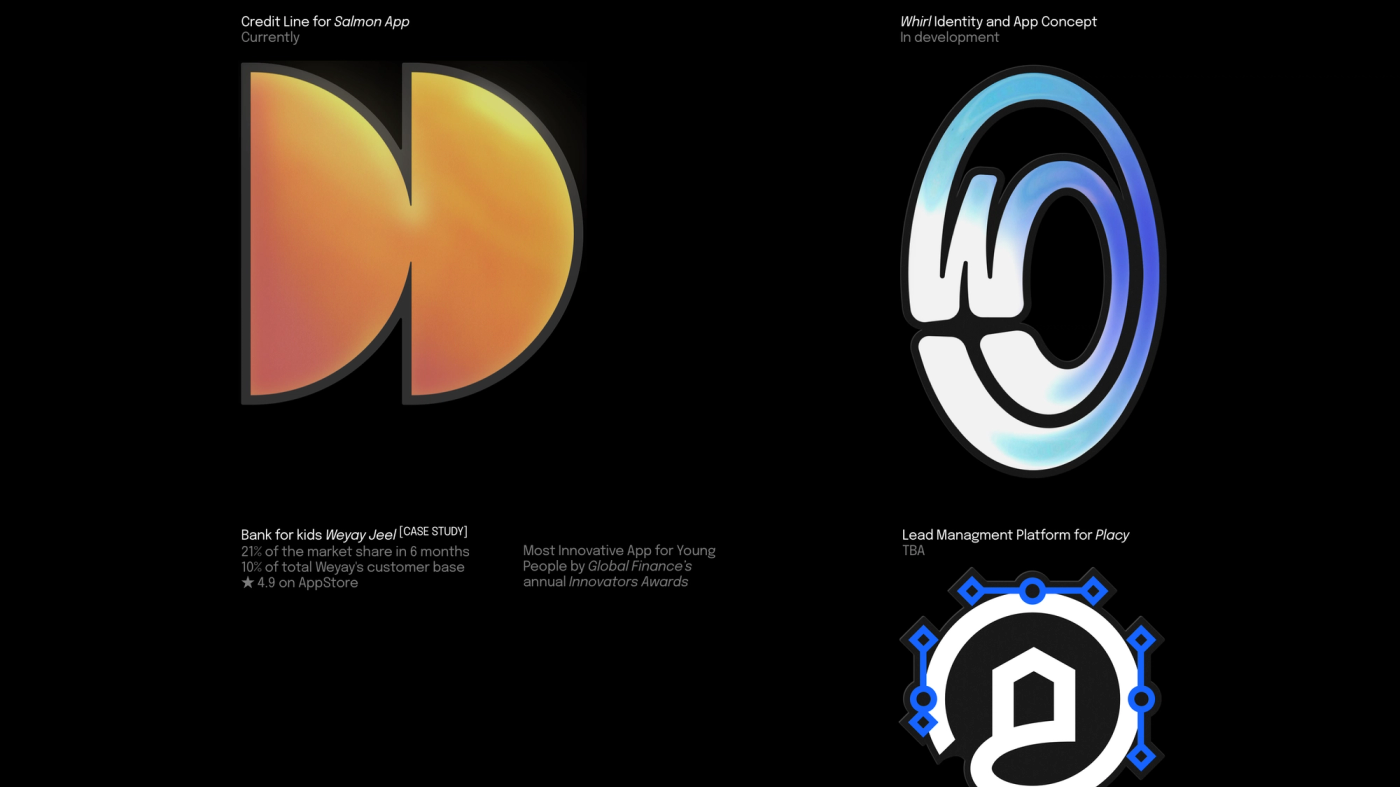
The portfolio stops being a display case of finished things and becomes a work log. It also settles the awkward "so what are you working on right now" question before it comes up on the first call.
What to do with all this
Not one of the eight requires rebuilding a site. A slider, a date in a corner, an exact number in place of a round one, a stage beside a project: these are an evening of edits.
What they have in common is that each one shortens the distance between "I opened a page I have never seen" and "I know who this person is". Everything else in a portfolio is doing the same job, just more slowly.
The other thirteen Sber portfolios are in the gallery.